
 By Magdalena Sanchez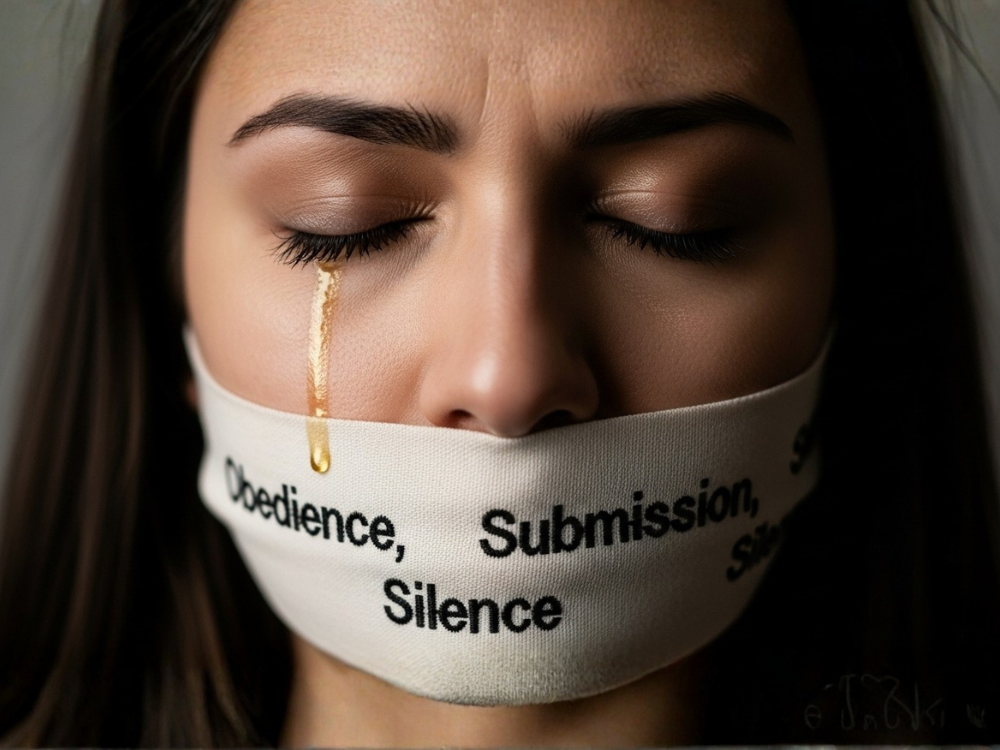
Spiritual abuse is one of the most silent and devastating forms of violence within faith communities. It leaves no visible marks on the body, but it wounds the soul, confuses the conscience, and erodes trust in God. Often, spiritual abuse presents itself wrapped in prayers, promises, and words of love. Yet behind this spiritual language there may be a desire for control, submission, and power over the lives of others.
When religious power is used to dominate or silence, faith ceases to be a source of freedom and becomes an inner prison. From that prison, many believers have learned to obey without discernment, to remain silent even when it hurts, and to believe that abuse is part of the divine plan. And it is precisely there—in that space of soul and mind where obedience is confused with faith—that other forms of violence begin to emerge: emotional, economic, psychological, and very often sexual violence.
This series seeks to shed light on that dark place where blind obedience turns into violence and abuse. Over the course of four reflections, we will begin to untangle the invisible threads that sustain spiritual abuse and the multiple forms of oppression that arise from it:
- Power disguised as faith: understanding spiritual abuse.
- From the altar to the body: spiritual abuse as a prelude to sexual abuse.
- When the Church remains silent: silence and spiritual complicity in the face of abuse.
- Healing wounded faith: rebuilding spirituality after abuse.
Each theme is an invitation to look through the eyes of the Gospel and to recognize that God is not revealed in control or fear, but in freedom, tenderness, and compassion.
“Where the Spirit of the Lord is, there is freedom” (2 Cor 3:17).
- When faith becomes control
There are stories that repeat themselves under different names. People who came to a church seeking comfort and ended up carrying the weight of fear. Women who entrusted their confidence to a pastor or leader who claimed to speak “on behalf of God” and ended up feeling guilty for their own suffering. Men who were silenced when they tried to report abuse. Young people who learned to distrust their own discernment, convinced that “disobedience” meant “lack of faith” and was a form of rebellion.
Spiritual abuse does not begin with shouting or threats, but with gentle words that seek to replace personal conscience and individual discernment with someone else’s voice—often that of a church leader or pastor. The abuser does not always appear as a tyrant, but rather as a guide, a spiritual parent, or a protector. Yet behind that image, a network of control is slowly being woven. Faith becomes a mechanism of obedience, and obedience turns into submission. Spirituality, which should liberate, is used to dominate.
Brazilian theologian Ivone Gebara warns that many faith communities confuse spirituality with submission, and that this confusion “has historically served to maintain unjust power structures under the appearance of holiness.” ¹ When obedience replaces the exercise of thinking and deliberating freely, and silence becomes a sign of fidelity, faith has been taken hostage.
- What is spiritual abuse
Spiritual abuse can be defined as the misuse of religious power—by an individual or an institution—to control, manipulate, or dominate others by appealing to the will of God or spiritual authority.
This abuse manifests in multiple ways:
- Manipulation through guilt (“God is disappointed in you if you doubt”).
- Use of fear as a tool of control (“If you leave, you will lose the blessing”).
- Demands for absolute obedience to religious leaders or systems.
- Suppression of personal voice, conscience, and autonomy.
Those who commit spiritual abuse replace the believer’s direct relationship with God with their own interpretation of faith. As a result, the affected person begins to depend emotionally and spiritually on the leader and becomes unable to make decisions independently.
Theologian Etienne Grieu reminds us that authentic theology occurs “when the Word of God resonates with people’s lives.” ² Spiritual abuse destroys that resonance by replacing a free encounter with God with obedience mediated by fear.
III. The roots of spiritual abuse
Ecclesial patriarchy and hierarchical power
Spiritual abuse finds fertile ground in authoritarian and patriarchal religious structures, where power is understood as domination rather than service. Theologian Elsa Támez denounces that many biblical interpretations “have legitimized obedience as a feminine virtue and silence as an expression of faith.” ³ In such ecclesial structures, authority is sacralized: questioning it is perceived as sin. The result is a community where submission is confused with fidelity and abuse remains invisible.
The spirituality of fear and guilt
In some religious contexts, punishment is preached more than grace. God is feared more than loved. This spirituality generates paralyzing guilt, leading believers to think that all suffering is deserved. When God’s love is presented as conditional—especially tied to “good behavior” within an ecclesial structure—the believer loses inner freedom.
The culture of silence
Silence is the atmosphere in which spiritual abuse breathes. In ecclesial structures that practice a culture of silence, questioning is taught to be rebellion, and speaking about pain is said to “divide the church.” Theologian María Pilar Aquino explains that imposed silence has been “one of the most effective tools of patriarchal power within religion.” ⁴ This silence protects the abuser and turns the victim into an involuntary accomplice to their own suffering.
- Jesus and power that serves
The Gospel offers a radically different image of power. Jesus confronted the religious authority of his time when it became a burden for others:
“They tie up heavy burdens, hard to bear, and lay them on the shoulders of others” (Mt 23:4).
His authority did not dominate; it liberated. “Whoever wishes to be great among you must be your servant” (Mk 10:43).
Jesus washed his disciples’ feet (Jn 13:1–15), showing that true leadership is expressed in service, not imposition. His exercise of power did not silence others; it awakened their voices. The paralytic, the woman with hemorrhage, the blind man—all recovered their voice, dignity, and bodies.
Spiritual abuse does the opposite: it robs people of their voice, diminishes and humiliates the most vulnerable, and enslaves. Therefore, any religious practice that nullifies inner freedom or imposes fear does not come from the Spirit of Christ.
- The invisible wounds of spiritual abuse
Spiritual abuse produces deep wounds that are not always visible but are felt in the soul:
- Psychological wounds: anxiety, guilt, difficulty trusting.
- Spiritual wounds: fear of prayer, a sense of unworthiness before God.
- Communal wounds: isolation and distrust toward the church or its leaders.
Theologian Leonardo Boff calls these wounds “mystical wounds,” because they destroy the experience of God as love and replace it with a spirituality of duty and fear. ⁵ Many survivors of spiritual abuse say they “lost their faith,” when in reality what they lost was a distorted image of God.
Healing that distorted image of God is a long process. It involves learning again that God is not offended by our questions, but rejoices when we recover our voice.
- Paths of discernment and prevention
- Educate in spiritual freedom. Teach that obedience without conscience is not a virtue. Mature faith is expressed in discernment, not submission.
- Re-examine theologies of power. Question discourses that exalt immovable hierarchies or “divine” privileges.
- Accountability. Pastoral authority must be accompanied, not idolized. Transparency and teamwork are antidotes to abuse.
- Care for souls without possessing them. Authentic pastoral care guides but does not control; accompanies but does not replace conscience.
- Listen to pain and believe those who speak. Silence and disbelief are allies of abuse.
The Spirit of God does not enslave. Where there is freedom, care, and respect, there is divine presence (2 Cor 3:17).
VII. Conclusion: healing the image of God
Naming spiritual abuse is not an attack on faith, but rather a defense of faith against its distortion. The God revealed by Jesus does not dominate but serves; does not demand silence but listens; does not humiliate but restores dignity.
True faith does not demand submission but participation. It does not require blind obedience, but responsible discernment. Believing in God should never mean renouncing the freedom that God himself has given. When faith communities become spaces where power disguises itself as spirituality, the Gospel is betrayed. But when abuse is unmasked and truth is embraced, the Kingdom of God—and God’s children—flourish.
And then the promise is fulfilled:
“The Spirit of the Lord is upon me… he has sent me to heal the brokenhearted” (Isa 61:1).
Introduction to the second theme of the series (next week)
Spiritual abuse rarely remains within the realm of ideas. Once conscience is dominated, the body becomes the next territory of conquest. In the next theme— “From the altar to the body: spiritual abuse as a prelude to sexual abuse”—we will explore how dynamics of spiritual and emotional manipulation open the door to more concrete forms of violence, and how misused religious power can cross boundaries that destroy trust, faith, and personal integrity.
Footnotes
- Ivone Gebara, Romper el silencio: una lectura feminista de la fe (São Paulo: Paulinas, 2000), 45.
- Etienne Grieu, El recurso a la Biblia en teología práctica (Paris: Centre Sèvres, 2016), 22.
- Elsa Támez, La Biblia de los oprimidos (San José: DEI, 1989), 27.
- María Pilar Aquino, Teología feminista latinoamericana (Madrid: Trotta, 1998), 82.
- Leonardo Boff, Saber cuidar (Petrópolis: Vozes, 1999), 54.