
 By Magdalena Sanchez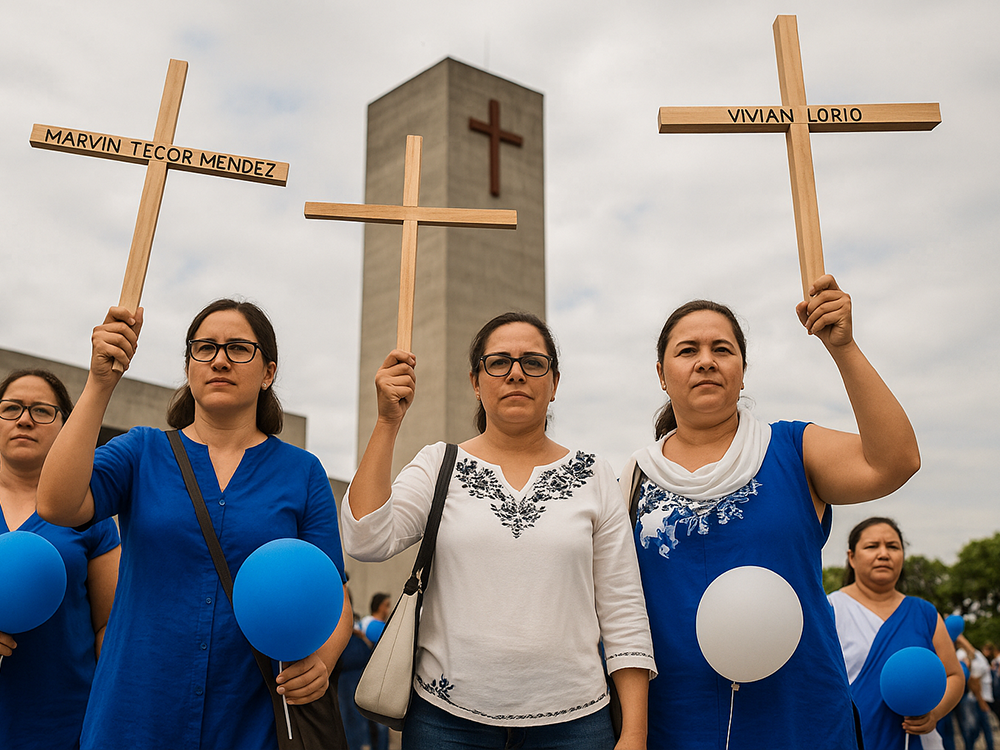
Violence against women in Latin America and the Caribbean remains a deeply entrenched human rights crisis. In 2023, more than 3,800 femicides were recorded in the region. Studies reveal that this violence also occurs within evangelical Christian communities, where it is often justified by misinterpretations of the Bible and a lack of pastoral training. There is an urgent need for churches to become safe spaces, with well-trained leadership, biblical interpretations committed to equity, and decisive action in defense of victims.
Violence against women in Latin America and the Caribbean constitutes one of the most persistent and alarming human rights crises in the region. Both the Declaration on the Elimination of Violence against Women (UN, 1993) and the Inter-American Convention on the Prevention, Punishment, and Eradication of Violence against Women—known as the Convention of Belém do Pará (OAS, 1994) – define this violence as gender-based violence that and results in, or is likely to result in, physical, sexual, or psychological harm. Added to this reality are cultural, social, economic, and religious factors that reinforce the subordination of women.¹ ²
The misinterpretation of certain biblical passages that reinforce male supremacy and female submission has contributed to normalization and justification of many forms of violence in Christian contexts. These interpretations not only perpetuate abuse within households, but also find resonance in ecclesial structures that, instead of denouncing violence, often conceal or minimize it.
One of the most comprehensive studies on this issue is the report by the Pan American Health Organization entitled Violence Against Women in Latin America and the Caribbean: A Comparative Analysis of Population-Based Data from 12 Countries (2003–2009). This report yielded the following findings:
- Intimate partner violence is prevalent in all countries analyzed, although with different levels of intensity.
- Emotional abuse and coercive control are common forms of violence, and they often precede physical violence.
- Alcohol consumption is a common factor in reported acts of violence.
- Exposure to violence in childhood increases the risk of experiencing or perpetrating violence in adulthood.
- In many regions, there is strong social acceptance of violence against women. ³
Recent statistics on gender-based violence
- In 2023, at least 3,897 women were victims of femicide in 27 countries and territories in Latin America and the Caribbean—equivalent to approximately eleven women killed every day for gender-related reasons. ⁴ ⁵
- According to the Pan American Health Organization, approximately 25% of women and girls in the Americas have reported experiencing physical and/or sexual intimate partner violence at some point in their lives. ⁶
- In countries such as Honduras, El Salvador, and the Dominican Republic, femicide rates per 100,000 women are 6.2, 3.3, and 2.7 respectively, placing them among the highest in the world. ⁷
Violence within evangelical christian communities
At the religious level, two studies conducted by the organization Paz y Esperanza—in Argentina (2013) and Peru (2014)—demonstrate that violence is also present within evangelical communities. In the Argentine study, 30% of evangelical adults reported having experienced domestic violence in the previous three years, and 20% of women and 10% of men stated that a woman should submit to her husband even in situations of violence, “because it is God’s will.” ⁸
In Peru, the study revealed no substantial differences between attitudes toward domestic violence within the evangelical community and those of the general population. What does distinguish the evangelical community, however, is the tendency to attribute violence to demonic influences or to the disobedience of women. ⁹
Both studies point to a deeply concerning reality: many victims of violence within churches experienced sexual abuse in childhood and continue to face violence in adulthood without receiving adequate pastoral support. Furthermore, many religious leaders lack training to address these issues effectively.
Urgent actions needed
For these reasons, it is imperative to:
- Reinterpret biblical texts from a perspective of equity and justice, as Jesus did in his interactions with women.
- Train ecclesial leadership in the prevention of, accompaniment in, and response to gender-based violence.
- Implement theological education programs grounded in human rights and gender equity.
- Listen to victims, believe them, and act pastorally with both compassion and firmness.
The Christian church has a responsibility to become a safe, healing, and prophetic space. It can no longer remain complicit through silence. The Gospel is good news for the oppressed—not for those who oppress them.
References:
- Organización de las Naciones Unidas (ONU), Declaración sobre la Eliminación de la Violencia contra la Mujer, 1993.
https://www.ohchr.org/sp/professionalinterest/pages/violenceagainstwomen.aspx - Organización de Estados Americanos (OEA), Convención Interamericana para Prevenir, Sancionar y Erradicar la Violencia contra la Mujer – Convención de Belém do Pará, 1994. https://www.oas.org/es/mesecvi/docs/Folleto-BelemdoPara-ES-WEB.pdf
- Bott, Sarah et al. Violence Against Women in Latin America and the Caribbean:
A Comparative Analysis of Population-Based Data from 12 Countries.
Washington, D.C.: Pan American Health Organization (PAHO), 2012. - Comisión Económica para América Latina y el Caribe (CEPAL), Al menos 11 mujeres son víctimas de feminicidio cada día en América Latina y el Caribe, https://www.cepal.org/es/comunicados/al-menos-11-mujeres-son-victimas-feminicidio-cada-dia-america-latina-caribe
- SWI swissinfo.ch, Violencia machista: un obstáculo persistente para los derechos humanos en América Latina, 8 de marzo de 2024.
https://www.swissinfo.ch/spa/violencia-machista%3A-un-obst%C3%A1culo-persistente-para-los-derechos-humanos-en-am%C3%A9rica-latina/88311799 - Organización Panamericana de la Salud (OPS), Violencia contra la mujer, 2023.
https://www.paho.org/es/temas/violencia-contra-mujer - Fondo de Población de las Naciones Unidas (UNFPA), La violencia basada en género, UNFPA LACRO, 2023. https://lac.unfpa.org/es/topics/violencia-basada-en-g%C3%A9nero
- García, Vanina et al. Dentro de las Cuatro Paredes: Evangélicos y Violencia Doméstica en Córdoba, Argentina. Córdoba: Paz y Esperanza, 2014.
- Calderón Carranza, Mauricio et al. Dentro de las Cuatro Paredes: Evangélicos y Violencia Doméstica en el Perú. Lima: Paz y Esperanza Internacional, 2014