
 By Magdalena Sanchez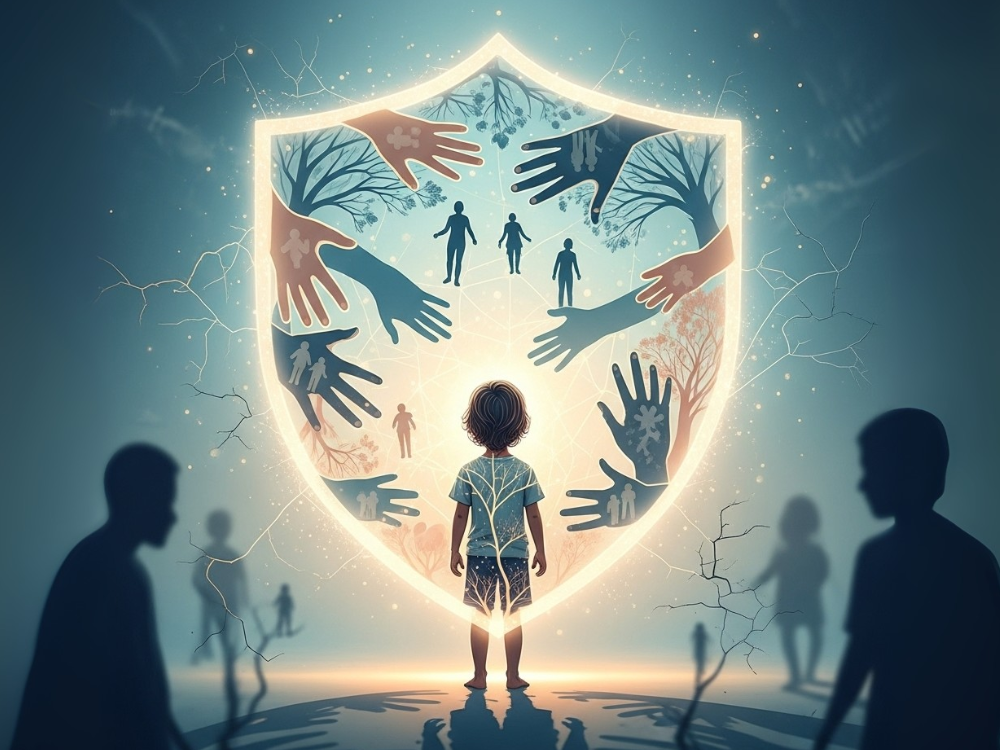
The home should be a child’s first sanctuary—a space of safety, affection, and growth. Yet for many children, the reality is painful and vastly different. Child abuse often originates in complex and dysfunctional family dynamics, along with risk factors hidden within this family fragility. When these risk factors are compounded by broader social and community circumstances, they create a breeding ground for child abuse that is difficult to detect and even harder to break. Understanding these risk precursors is not a mere academic exercise; it is a foundational step in weaving an effective protective network. This essay seeks to illuminate the risk factors at both the family and community levels, as well as those specific to sexual abuse, turning prevention into the invisible shield childhood so greatly needs.
- Family and community-Level risk factors
Child abuse is rarely an isolated event. It typically develops within family and social vulnerabilities which—though they never justify maltreatment—help explain why it occurs. Addressing these factors is the first step toward prevention.
- The cycle of violence: A story that repeats itself
One of the most striking and difficult risk precursors to break is the cycle of violence.
Those who suffered abuse in childhood have a significantly higher probability of repeating those abusive behavioral patterns in adulthood. Unresolved childhood trauma can manifest in an inability to manage frustration or stress, leading a person to resort to aggression as the only form of control or conflict resolution they know. Trauma is like a wound that, if left untreated, continues to infect those nearby. As trauma expert Dr. Morales notes, intergenerational trauma creates a pattern that “writes the history of violence into the body and mind, making aggression appear to be the only form of communication” [1].
This phenomenon is evident in cases where a parent who was beaten as a child unconsciously uses the same physical violence as a method of “discipline,” without recognizing the harm it causes. Breaking this cycle requires deep self-awareness and a commitment to healing—for both the potential aggressor and the victim.
B.Human Fragility: Mental Health and Substance Abuse
Human emotional fragility is often worsened by mental health issues and substance abuse. Alcohol or drug use lowers inhibitions and impairs judgment, creating an unstable and dangerous environment for children. In such contexts, neglect and abusive behaviors may arise from the caregiver’s inability to function adequately.
For example, a caregiver struggling with addiction may spend family resources on alcohol or drugs, leaving the child without proper nutrition, medical care, or stable housing. Stress and unresolved disorders—such as depression or chronic anxiety—can erode patience and empathy, making caregivers unable to meet their children’s emotional needs in healthy ways [2]. A home where mental health is ignored is a home with weakened foundations, and it is our responsibility as a society to support those who need help before the family structure collapses.
II. External Factors: The Social and Community Environment
A. Poverty and Social Isolation
Beyond individual problems, risks also emerge in the broader social and community environment. Social isolation is fertile ground for abuse, as families without support networks—friends, relatives, or community—are more vulnerable. Without a system of support, abuse goes unnoticed and persists in silence.
This isolation often intersects with poverty and economic stress which, though not direct causes of abuse, increase tension within the home. As Dr. Fernández points out, financial pressure can push caregivers into exhaustion and desperation, reducing their ability to handle the challenges of parenting constructively [3]. In a home where parents work long hours for low wages, extreme fatigue and lack of time can lead to neglect, where the child’s basic needs are not met.
Poverty is not a moral failing, but a condition capable of unraveling the family fabric and exposing its most vulnerable members to unimaginable risk.
B. The Abuser: Profile and Behaviors
Sexual abusers do not always fit stereotypes. They are often trusted and familiar individuals—uncles, cousins, family friends, or authority figures such as coaches, pastors, or priests. Their behavior relies on manipulation and access to the child. These predators use their position to reach the victim and gain their trust.
Abuse is often not a spontaneous event but a process in which the abuser gradually prepares the child—known as grooming—creating secrecy and dependency. In this process, the potential victim may begin to see the abuser as the only person who listens, protects, or cares for them. Psychologist Dr. Cárdenas explains that “the abuser exploits an emotional vulnerability or a need for attention in the child, turning affection into a tool of control” [4].
C. Environmental and Situational Factors
Beyond the abuser’s profile, certain environmental factors increase the risk for vulnerable children. Lack of supervision is a critical precursor; leaving children alone with untrustworthy adults or in risky settings creates opportunities for abuse.
Family dysfunction—such as poor communication, blurred boundaries, and constant conflict—can make a child feel alone and unheard, making them more susceptible to manipulation.
Finally, the culture of silence and protection of family members who are predators, along with the failure to report abuse to authorities, are factors that perpetuate the problem. The stigma placed on victims and the impunity enjoyed by abusers contribute to keeping the abuse hidden and preventing justice from prevailing.
Conclusion: Prevention as a Collective Responsibility
In conclusion, preventing child abuse is not a task limited to reporting or reacting. It is a collective responsibility that begins with understanding risk factors and cultivating the will to create safe environments for the youngest and most vulnerable. By recognizing the cycle of violence, the role of mental health, the impact of isolation, and the influence of cultural and social norms, we can begin to construct the invisible shield that protects our children. It is not an easy task, but it is one that calls us to educate, support, and safeguard families so that the most vulnerable may grow in a home that is truly a sanctuary.
References
Morales, L. (2020). Rompiendo el Círculo: El Trauma Intergeneracional y su Impacto en la Crianza. Editorial Raíces.
Cárdenas, A. (2019). Adicciones y Violencia Intrafamiliar. Revista Latinoamericana de Psiquiatría.
Fernández, E. (2021). El Costo Oculto de la Pobreza: Estrés Económico y Violencia Doméstica. Fondo Editorial de las Américas.
Cárdenas, A. (2019). Abuso Sexual Infantil y su Relación con el Control y la Manipulación. Editorial Mentes Activas.